


The Stealth Gamble: Is India Finally Picking the Russian Su-57 Felon?
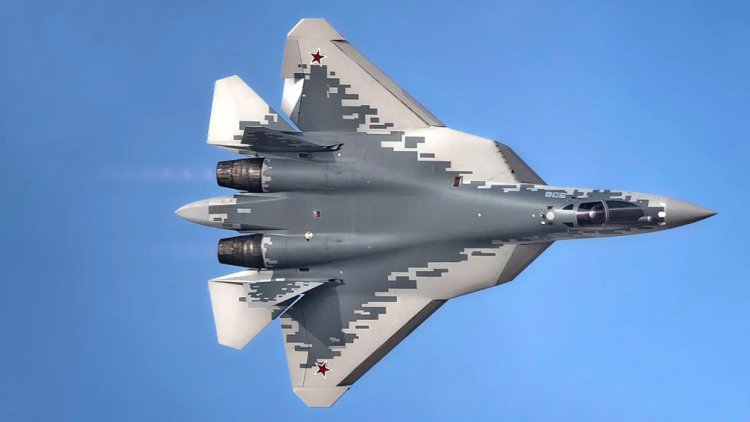
With China and Pakistan expanding their 5th-gen fleets, the Indian Air Force (IAF) is taking a fresh look at the Russian Su-57 Felon. Will this be India's bridge to the AMCA?
 Rajeev

New Delhi | February 24, 2026 :The Indian Air Force (IAF) finds itself at a strategic crossroads. As the regional skies become increasingly crowded with 5th-generation stealth fighters—specifically China’s Chengdu J-20 and Pakistan’s move toward the Shenyang J-35A—New Delhi’s long-standing "wait-and-see" approach is shifting toward urgent action.
Recent reports suggest that the Sukhoi Su-57 "Felon" has re-emerged as the primary contender to fill India's critical stealth gap. But why is India returning to a platform it walked away from in 2018?
1. The "Stealth Gap" Crisis
The IAF currently operates a formidable 4.5-generation fleet, including the Rafale and the upgraded Su-30MKI. However, against 5th-generation threats that prioritize "Low Observability" (LO) and advanced sensor fusion, even the best 4.5-gen jets are at a disadvantage.
With India's indigenous Advanced Medium Combat Aircraft (AMCA) not expected to enter service before the mid-2030s, the IAF needs a "stopgap" solution to maintain regional air superiority.
2. Why the Su-57? Dogfights vs. Stealth
Unlike the American F-35, which focuses almost entirely on "invisible" long-range strikes, the Su-57 Felon is built on a different philosophy: Supermaneuverability.
-
The Russian Pitch: Russia argues that in actual combat, stealth can be countered by low-frequency radars. Therefore, the Su-57 balances a reduced radar cross-section (RCS) with 3D thrust-vectoring engines for extreme agility in dogfights.
-
The "MKI" Factor: India already has a massive infrastructure for Sukhoi aircraft. A licensed production deal in Nashik would be faster and more cost-effective than building a brand-new ecosystem for a Western jet.
3. The "Mother of All Offers"
Moscow has significantly upped the ante in 2026. The latest proposal for the Su-57E (Export) variant reportedly includes:
-
Deep Tech Transfer: Access to source codes—something the US has historically denied with the F-35.
-
MUM-T Capability: Integration with the S-70 Okhotnik-B stealth drone, allowing Indian pilots to control a "loyal wingman" in contested airspace.
-
Engine Maturity: The inclusion of the new Izdeliye 30 engine, which provides higher thrust and better fuel efficiency than earlier prototypes.
4. Geopolitical Tightrope: Russia vs. The West
Choosing the Su-57 is not just a military decision; it’s a geopolitical statement.
-
The US Push: Washington has been aggressively pitching the F-35A to steer India away from Moscow. However, New Delhi remains wary of the high maintenance costs and "software locks" that come with American hardware.
-
The Rafale Alternative: While India is expanding its Rafale fleet, the French jet lacks the internal weapons bays required for "true" 5th-gen stealth performance.
5. The Verdict: A Bridge to AMCA?
The Su-57 is increasingly seen not as a replacement for the AMCA, but as its precursor. Operating a fleet of 36–40 Felons would give IAF pilots and HAL engineers firsthand experience with stealth materials, internal weapons management, and advanced sensor fusion.
Is the risk worth it? With the IAF squadron strength hovering at a critical low, the "Felon" might just be the bold gamble India needs to keep its neighbors in check.