


Strategic Blow: Iran Strikes US THAAD Radar Systems Across Jordan and the Gulf
Iran has reportedly destroyed high-value US THAAD radar systems in Jordan and other Gulf locations. Discover the strategic impact on regional missile defense and the evolving West Asia conflict.
 Rajeev


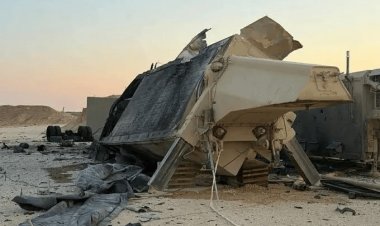
March 7, 2026 — As the ongoing conflict between the United States, Israel, and Iran enters its second week, the tactical landscape has shifted significantly. Following recent retaliatory strikes, Iranian forces have successfully targeted critical US-operated missile defense infrastructure, most notably destroying a $300 million AN/TPY-2 radar system at the Muwaffaq Salti Airbase in Jordan.
The Destruction of the THAAD "Eyes"
The Terminal High Altitude Area Defense (THAAD) system is considered the cornerstone of America’s ground-based missile defense. Its primary sensor, the AN/TPY-2 radar, is responsible for detecting, tracking, and guiding interceptor missiles to destroy incoming ballistic threats at the edge of the atmosphere.
Satellite imagery and defense analysis have confirmed that Iranian precision strikes severely damaged or destroyed this radar complex in Jordan. The loss represents a substantial degradation of US surveillance capabilities in the Levant.
"If successful, an Iranian strike on a THAAD radar would mark one of Iran's most successful attacks so far," noted Ryan Brobst, a defense analyst at the Foundation for Defense of Democracies.
A Systematic Campaign Across the Gulf
The strike in Jordan appears to be part of a broader, systematic Iranian effort to degrade the "eyes" of US and allied air defense networks across the region. Reports and satellite evidence indicate similar targeting patterns at other critical nodes:
-
Saudi Arabia: Prince Sultan Airbase, a key hub for regional air defense, has sustained damage consistent with precision strikes on radar and support equipment.
-
United Arab Emirates: Installations near Al-Ruwais Airbase, which house radar and tactical vehicles, were also targeted by direct hits.
-
Qatar: Earlier in the conflict, damage was reported to an AN/FPS-132 early-warning radar at Al Udeid Airbase. Unlike the mobile THAAD radar, this is a fixed installation designed to detect threats at extreme distances.

What This Means for Regional Security
The degradation of these high-value sensors creates dangerous gaps in regional missile defense. With the THAAD radars out of commission in several locations, US commanders are forced to:
-
Shift Interception Duties: The burden of defense now falls more heavily on Patriot missile systems. However, officials warn that PAC-3 interceptor stocks are already running low across the theater.
-
Reprioritize Assets: There is speculation that the US may attempt to redeploy existing THAAD batteries from other global locations, such as South Korea, to stabilize the Middle East front.
-
Increased Risk of Breakthroughs: With fewer precision sensors to guide interceptors, there is a heightened probability that Iranian ballistic missiles could successfully reach their targets in future barrages.
The Conflict’s Broader Context
This escalation follows the February 28 initiation of hostilities, which triggered large-scale air operations across the region. Iran’s strategy appears designed to force the US to expend its limited supply of sophisticated interceptors against cheap, mass-produced drones, while conserving its own ballistic missile arsenal.
As the US Pentagon pushes to accelerate the production of "Exquisite Class" weaponry, the region remains on edge. Iranian President Masoud Pezeshkian has signaled a desire for de-escalation with neighbors, provided their territory is not used for attacks against Iran, but the military situation at US bases remains volatile and highly active.
The destruction of THAAD radar assets is more than a financial loss—it is a strategic turning point. By systematically targeting the sensor infrastructure that allows the US to track incoming missiles, Iran has fundamentally altered the defensive calculus in West Asia. As the war continues, the effectiveness of the remaining air defense shield will be the primary focus for military observers worldwide.