


10 Days of Stealth: How Delhi Police Dismantled the New Lashkar Module
Go inside the Delhi Police Special Cell’s 10-day operation that busted a Lashkar-linked terror module. Discover how "Free Kashmir" posters led to arrests in Tamil Nadu and West Bengal.
 Rajeev


In a high-stakes game of cat and mouse that spanned three states and ten days, the Delhi Police Special Cell has successfully neutralized a significant terror module linked to the Pakistan-based Lashkar-e-Taiba (LeT).
What began as a localized investigation into provocative posters in the national capital quickly turned into a pan-India operation, revealing a deep-seated conspiracy orchestrated by handlers across the border. Here is the exclusive timeline and inside story of the operation that brought down the hammer on this sleeper cell.
1. The Trigger: Posters at the Metro
The operation was sparked in early February 2026 when provocative posters with slogans like "Free Kashmir" and "Stop Genocide" appeared at over 10 locations in Delhi, including the sensitive Delhi Metro network.
While they initially appeared to be isolated acts of vandalism, the Special Cell's digital forensic team traced the origin of the propaganda back to a coordinated network. Intelligence inputs soon confirmed that these weren't just activists, but "foot soldiers" for a larger, more dangerous plot.
2. Tracking the Signal: From Malda to Tiruppur
The breakthrough came when investigators tracked digital footprints to Malda, West Bengal.
-
The First Arrests: Two suspects, identified as Umar Farooq and Robil ul Islam, were apprehended.
-
The Digital Trail: Their seized mobile phones contained a goldmine of encrypted chats. These messages pointed toward a group of individuals hiding in plain sight—thousands of kilometers away in the textile hub of Tiruppur, Tamil Nadu.
3. The "Garment Worker" Disguise
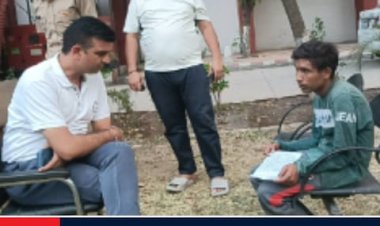
For the next seven days, undercover teams from the Delhi Special Cell camped in Tamil Nadu. They discovered that the suspects were living as migrant laborers:
-
The Cover: The suspects were working in garment units in areas like Palladam and Uthukuli.
-
The Deception: They used forged Aadhaar cards to blend in with the local workforce.
-
The Strike: In a coordinated midnight raid, six more suspects were arrested: Mizanur Rahman, Mohammad Shabat, Umar, Mohammad Litan, Mohammad Shahid, and Mohammad Ujjal.
4. The Targets: Red Fort and Chandni Chowk
Interrogations have revealed a chilling plan. The module had allegedly conducted reconnaissance on several high-profile targets in Delhi, specifically:
-
Religious Sites: A prominent temple in the Chandni Chowk area.
-
Heritage Landmarks: The Red Fort, which has remained under heavy guard following a previous blast in late 2025.
-
The Motive: Intelligence suggests the module was instructed by their handler, Shabbir Ahmed Lone (operating from Bangladesh), to carry out IED attacks to "avenge" a mosque blast that occurred in Islamabad on February 6.
5. The Bangladesh-Pakistan Connection
The Delhi Police have confirmed that while the suspects were primarily Bangladeshi nationals, the strings were being pulled by the ISI-backed Lashkar-e-Taiba.
-
The Evidence: 16 SIM cards and 8 mobile phones were recovered, containing reconnaissance videos of crowded Delhi markets.
-
The Status: All eight suspects are currently being brought to Delhi via transit remand for further interrogation to uncover the full extent of their sleeper cell network.