


"Do the American Thing": Neal Katyal Challenges Trump’s 15% Tariff Surge
Legal expert Neal Katyal dares President Trump to take his 15% global tariff hike to Congress. Explore why the son of Indian immigrants says the new levy lacks legal teeth after the Supreme Court victory.
 Rajeev


The dust has far from settled after the U.S. Supreme Court’s landmark 6-3 ruling against President Donald Trump’s trade policies. In a defiant move this weekend, the President bypassed the court’s "ridiculous" decision by invoking Section 122 of the Trade Act of 1974, hiking global tariffs to 15%.
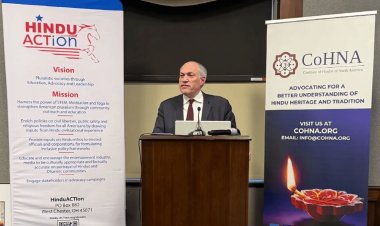
However, the man who led the legal charge against him—prominent Indian-American lawyer Neal Katyal—isn't backing down. Katyal has issued a direct challenge to the President: "Do the American thing and go to Congress."
1. The Flaw in the "15% Strategy"
Katyal, a former Acting U.S. Solicitor General, argues that Trump’s reliance on Section 122 is a legal house of cards.
-
The Contradiction: Katyal points out that Trump’s own Department of Justice (DOJ) previously argued that Section 122—which deals with balance-of-payments (BOP) crises—does not apply to simple trade deficits.
-
The "American Way": In a scathing post on X, Katyal wrote: "If his tariffs are such a good idea, he should have no problem persuading Congress. That’s what our Constitution requires."
-
150-Day Clock: Under Section 122, these tariffs are legally capped at 150 days. To extend them, Trump must seek a vote from a Congress that has historically been split on his protectionist agenda.
2. Neal Katyal: The Son of Immigrants Taking on the President
The story has a powerful personal angle. Katyal, born to Indian immigrant parents (a pediatrician mother and an engineer father), highlighted the strength of the American system in recent interviews.
"I was able to go to court—the son of immigrants—and say on behalf of American small businesses, 'Hey, this President is acting illegally.'... You might be the most powerful man in the world, but you still can’t break the Constitution."
Katyal’s victory at the Supreme Court on Friday (February 20, 2026) struck down "reciprocal" tariffs that had previously hampered global trade, including exports from India.
3. Why This Matters for India
While the Supreme Court ruling was a victory for Indian exporters (textiles, pharma, and gems), the new 15% "emergency" surcharge creates fresh hurdles.
-
Indian Leverage: Legal experts suggest that because Trump's new tariffs are on "uncertain legal footing," India has more leverage to renegotiate the terms of the upcoming bilateral trade deal.
-
Gita Gopinath’s Support: Highlighting the global significance, former IMF official Gita Gopinath endorsed Katyal’s critique, noting that the administration is confusing basic economics by equating trade deficits with balance-of-payments crises.
4. The Political Battleground: Congress
By daring Trump to go to Congress, Katyal is pointing to the President’s biggest obstacle. Even with a Republican-controlled legislature, many lawmakers are wary of the inflationary pressure global tariffs place on their constituents.
If the 15% surcharge is challenged in court again—using the DOJ’s own previous admissions as evidence—Trump may find himself back at square one before the 150-day window expires.