


After Iran’s Missiles Hit Their Skies: Will the Gulf Countries Join the War?
Iran's missiles just crossed the skies of the UAE, Qatar, and Kuwait. Will the Gulf countries fight back? Read the latest on the Middle East crisis here.
 Rajeev


A Night of Fire in the Desert Skies
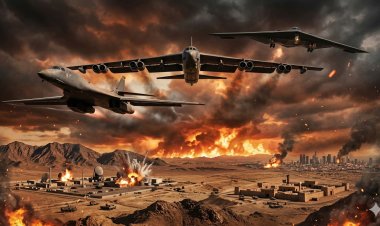
The Middle East is at a tipping point. Just hours ago, the world watched as hundreds of Iranian missiles and drones streaked across the night sky. But they weren't just heading for Israel. They flew directly over cities like Dubai, Doha, and Kuwait City.
For the people living in the Gulf countries (The UAE, Saudi Arabia, Qatar, Kuwait, Oman, and Bahrain), this was a moment of pure terror. Huge explosions were heard as defense systems shot down missiles in mid-air.
Now, everyone is asking the same big question: Will the Gulf States enter the war?
Background: Why the Gulf is Caught in the Middle
To understand this, we have to look at the map. The Gulf countries sit right between Iran and the Western-backed forces of the US and Israel.
For years, countries like Saudi Arabia and the UAE have tried to stay neutral. They want to build big cities, host world events, and sell oil. They do not want a war that destroys their malls, airports, and oil fields.
However, Iran’s recent "salvo" (a large number of missiles fired at once) changed everything. When missiles fly over your house, you can no longer say the war is "somewhere else."
What is Happening Now?
The situation is very tense. Here is the latest from the ground:
-
State of Emergency: Kuwait and the UAE have put their militaries on high alert.
-
The US Presence: The United States has many "bases" (military camps) in these Gulf countries. Iran has warned these countries that if the US uses these bases to attack Iran, the Gulf countries will be targeted next.
-
Broken Silence: For the first time, some Gulf leaders are speaking out against Iran’s "violation of their airspace." This means Iran flew weapons over their land without permission.
Why It Matters to Common People
This isn't just a story about soldiers and politicians. It affects you too:
-
Safety of Expats: Millions of people from India, Pakistan, and the Philippines work in the Gulf. If these countries enter the war, these workers could be in danger.
-
The "Oil Choke": Most of the world’s oil goes through the Gulf. If a full war starts, oil prices will explode. This will make everything—from your bus fare to your grocery bill—much more expensive.
-
Aviation Hubs: Airports in Dubai and Qatar are the "crossroads of the world." If they become part of a war zone, global travel will stop.
Expert Opinion: Will They Fight?
Most experts believe the Gulf States do not want to join the fight.
"The Gulf countries are in a 'damned if you do, damned if you don't' spot," says one regional analyst.
-
If they help Israel and the US, Iran might attack their oil refineries.
-
If they stay quiet, they look weak and let Iran control the region.
The most likely path is that they will provide "intelligence" (secret information) to the US but will try to avoid firing their own guns.
What Could Happen Next?
There are three ways this could go:
-
Scenario A (The Calm): The US and Iran reach a secret deal to stop. The Gulf countries go back to normal business.
-
Scenario B (The Proxy War): The Gulf states don't fight directly, but they fund other groups to fight Iran.
-
Scenario C (The Nightmare): A missile accidentally hits a major city like Riyadh or Dubai. This would force the Gulf states to join the war immediately.
Key Points Summary
-
Iran fired missiles that crossed the airspace of several Gulf nations.
-
The UAE, Kuwait, and Qatar are now under a state of emergency.
-
Iran has warned Gulf states not to let the US use their land for attacks.
-
Global oil prices and travel are at high risk if the conflict grows.
-
Millions of foreign workers in the Gulf are worried about their safety.
The "Salvo" from Iran has brought the war to the doorsteps of the Gulf. While these countries are rich and powerful, they are also very vulnerable. No one wins in a Middle East war. For now, the world holds its breath, hoping that the leaders of these nations can find a way to keep the peace before the next missile falls.